
Cricket Betting in New Zealand 2026: The TAB NZ Era, the Cricket, and the Arithmetic in the Odds
 Available in US
Currency snapshot: 26 October 2026 · verified against TAB NZ’s own published terms, the Racing Industry Act 2020 (as amended 2025), and the Department of Internal Affairs statements on the betting prohibition.

A cricket side has 11 players, and only one bookmaker may lawfully take your bet on what they do next. That single fact reshapes every other choice a New Zealand punter makes about cricket. The market that existed before 28 June 2025 is gone; what replaced it is a monopoly held by TAB NZ, running two online brands called TAB and Betcha, and a long list of offshore operators that New Zealand law now tells to withdraw. This page walks through what that means for cricket specifically: which tournaments to follow, how the three formats change the markets offered, what an odds margin actually does to a payout, and why “free” anything attached to a cricket bet tends to cost more than it looks.
Table of Contents
- Predictions, Tips, and Why the Forecast Matters Less Than the Bankroll
- Bet Types, Odds, and How the Cricket Format Shapes the Market
- Cricket Tournaments, Formats and What the New Zealand Punter Sees
- The Ten Operators Reviewed, and the Reading That Comes Before the Bet
- What the Bookmaker’s Margin Does to a Cricket Bet
- The Legal Frame: Section 74AAA and What It Means for a Cricket Punter
- Safeguards: Where Help Lives and What the Operator Owes
- Crypto and Cricket: Why the Question Has a Short Answer
- Mobile and App: TAB NZ’s Two Brands, Both on the App Store
- Live Betting and Cash Out on Cricket Markets
- Frequently Asked Questions
Predictions, Tips, and Why the Forecast Matters Less Than the Bankroll
A punter chasing cricket predictions is buying information about an uncertain event. The information is real: head-to-head records, pitch reports, weather, form, and the bowler workload in a multi-game series all move the price of a bet. None of it removes the bookmaker’s margin, and none of it changes what happens when the forecast is wrong, which is most of the time. The job of a tip is to find bets whose odds underprice the chance — what a trader calls value — and to skip the rest. The job is not to find winners. Anyone selling certainty is selling something that does not exist.
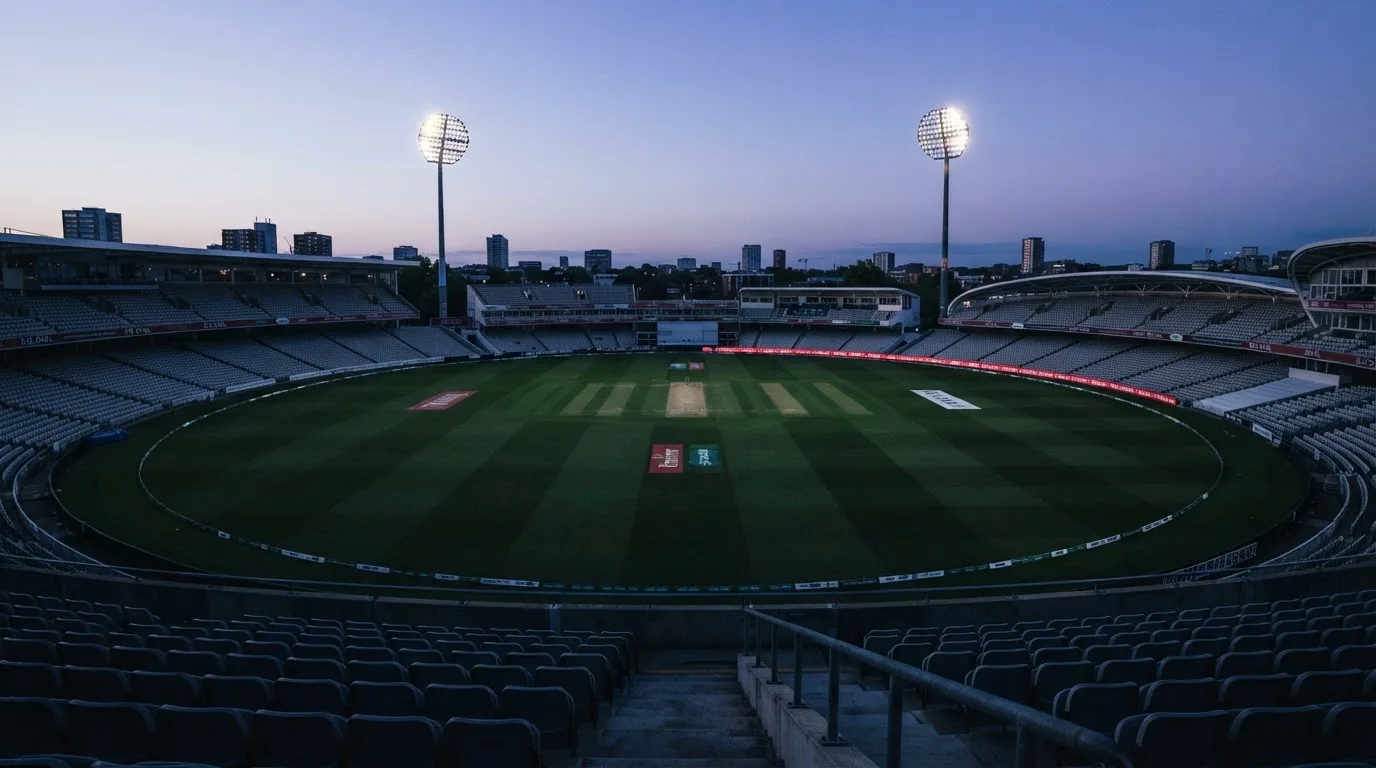
That framing matters in New Zealand more than in markets with a dozen competing bookmakers. With one lawful sportsbook, there is no rival price to arbitrage against, no odds comparison site that scans TAB NZ against three others and tells a punter which side of the line to take. The price TAB NZ quotes is the price the market has, full stop. A tipster whose picks beat the TAB NZ margin across a season is doing something measurable; one whose picks win on a handful of matches is doing nothing that randomness cannot.
The bankroll is the second half of the picture, and the duller half. Cricket is a long-format sport with multi-day Tests, 50-over ODIs and 20-over T20s, and a punter who bets at the same stake on every format spends a very different amount per hour of cricket watched. T20s settle fast and burn through bankroll. Tests take five days, with markets on session, day and innings, so a stake can be spread over a much longer contest. Neither is better; they are different games for different budgets, and the punter who decides which is theirs before the first ball is the punter who survives a losing week.
A simple rule carries further than any tipster list: bet a fixed small fraction of the bank on any single selection, never chase a loss with a bigger stake, and stop when the day’s pre-set loss is reached. It reads like advice from a textbook because it is, and the textbook is right because the arithmetic is right. A 5% edge on a 1.90 bet is still a 5% edge after three losses in a row, and acting on the edge means staking the same amount again, not doubling.
Bet Types, Odds, and How the Cricket Format Shapes the Market
Three formats, three different market menus, and three different reasons the same selection can be priced differently. Test cricket plays out across up to five days with up to four innings in total, so bookmakers offer markets on session winner, runs at the fall of the next wicket, method of dismissal, and whether the match ends in a draw. ODIs run to a fixed 50 overs per side and end in a result more often than not, so the dominant markets are match winner, top batsman, top bowler, total runs, and a fast-closing set of over-by-over lines. T20s compress the whole contest into roughly three hours, and the markets follow: most sixes, first ball, player performance points, and a long list of in-play bets that resolve ball by ball.

Two structural rules shape all of it. The first is how a tied match is settled: in ODIs and Tests, a tie is possible at the end of play, and a no result is possible in rain-affected ODIs when fewer than the minimum overs (usually 20) are bowled. In rain-affected ODIs the Duckworth-Lewis-Stern method usually sets the target or result. In T20s a tie is decided by a super over. A punter who backs a one-sided favourite in a rain-threatened ODI is betting on the favourite and on the rain not arriving; a punter who backs the draw in a Test is betting on five days not producing a result. Each is a real market with a real price, and each is settled by the rules bookmaker’s terms spell out — read them before staking.
The second rule is that odds are decimal, not fractional, in New Zealand betting culture. A $10 stake at odds of 2.10 returns $21.00 if it wins: the original $10 stake plus $11.00 in profit. A stake at 1.50 returns $15.00. The arithmetic is the same regardless of the format — stake multiplied by odds gives the return, and the difference between return and stake is the profit — but the margins inside those prices are not the same. A 1X2 market on a one-sided ODI might carry a 7% margin, while a session winner market on day three of a Test carries a much wider one because the bookmaker has thinner information and more uncertainty to price around.
A combination bet multiplies the odds of its legs into one price, which looks generous and usually is not. Three legs at 1.50, 1.60 and 1.70 compound to roughly 4.08, and the margin compounds with them. The same stake on each leg separately exposes the punter to three independent chances of winning; the combination bet reduces that to one chance of all three landing, and the price rarely compensates for the loss of independent chances. Same-game multis work the same way: convenient, often boosted on the surface, and still priced to include the bookmaker’s margin on every leg.
Cash out, where the bookmaker offers to settle a bet early at a current price, changes the practical shape of in-play betting. A punter who has backed a T20 side at 2.20 and watched them cruise to 80 for 2 after 10 overs can lock in a smaller profit rather than wait for the result. The cash-out price the bookmaker offers is its own price, with its own margin, and it is almost always worse than the implied value of waiting. It is a tool for managing risk, not for finding value.
Cricket Tournaments, Formats and What the New Zealand Punter Sees
The cricket calendar runs from the southern hemisphere summer into the autumn and then picks up with the northern hemisphere summer. The International Cricket Council (ICC) governs the game, twelve nations hold Test status, and the World Test Championship has run a championship cycle since its inaugural season in 2019. New Zealand’s men play Test cricket under the Black Caps name, and they are one of the twelve full ICC members with Test status. The women’s side plays under the White Ferns. Both play ODIs and T20s against the same set of opponents, with additional fixtures against associate nations in the shorter formats.
The headline event of the 2026 international cricket calendar was the ICC Men’s T20 World Cup, held from 7 February to 8 March 2026 and co-hosted by India and Sri Lanka with 20 nations taking part. India won, beating New Zealand by 96 runs in the final. The next cycle of ICC events follows, and TAB NZ’s cricket markets open in the days leading up to each fixture, with outright markets on the tournament winner available weeks before the first ball.
Domestic cricket sits in a different place in the market menu. Super Smash is New Zealand’s domestic T20 competition; the Plunket Shield is the first-class competition; the Ford Trophy is the domestic one-day cup. TAB NZ covers all three with pre-match and live markets. The volume of markets on a Plunket Shield match is thinner than on a Black Caps ODI, and the margins tend to be wider because fewer punters price the line.
What TAB NZ does not carry is worth knowing too. The platform does not host a betting exchange, and spread betting sits outside TAB NZ’s definition of sports betting. There is no lawful New Zealand betting exchange, and no platform licensed in New Zealand offers spread betting on cricket. A punter who wants to back or lay a selection at a price other than TAB NZ’s has to look offshore, with all the consequences that flow from that choice under New Zealand law.
The Ten Operators Reviewed, and the Reading That Comes Before the Bet
TAB NZ runs two online brands: TAB itself and Betcha. Both are the same operator, run under a long-term agreement between TAB New Zealand and Entain signed in 2023. Entain runs the betting business under a 25-year agreement signed in 2023 that gives Entain a 50/50 share of gross profits, with at least $150m a year going to TAB NZ for the first five years, and Entain pledged a one-off $100m payment to the racing sector. They are not rivals; they are two shopfronts on the same product, and the choice between them is a choice of interface rather than a choice of bookmaker.
The other eight brands reviewed below are not licensed in New Zealand. They may take bets from people in many jurisdictions, but under section 74AAA of the Racing Industry Act 2020, only TAB NZ may offer sports betting to a person in New Zealand, regardless of where the punter is resident or incorporated, and the Department of Internal Affairs told providers serving New Zealand to withdraw with immediate effect. A punter who opens an account with one of these brands is betting on cricket through an offshore operator that New Zealand law tells not to serve the category of Take bets from people in New Zealand. That is the legal position; the practical position is that a punt placed with one of these brands sits outside the New Zealand harm-minimisation framework, outside the New Zealand complaints route, and outside the protection of New Zealand consumer law.
The verdict on each brand is written from the perspective of a New Zealand punter who wants to bet on cricket. Where the brand has nothing to offer that TAB NZ does not already cover at the same or better price, the verdict says so. Where the brand has a feature — a market type, a price boost, an in-play product — that TAB NZ does not match, the verdict says so too. Both groups are described; the group they belong to is named on each.
| Brand | New Zealand status | What the operator’s own terms state on cricket |
|---|---|---|
| TAB | TAB NZ brand — only operator lawfully offering sports and racing bets in New Zealand | Sports and racing markets including cricket pre-match and live; fixed-odds and tote bets; no published exchange or spread betting |
| Betcha | TAB NZ brand — only operator lawfully offering sports and racing bets in New Zealand | Sports and racing markets including cricket pre-match and live; fixed-odds and tote bets; younger product with the same TAB NZ wallet behind it |
| Roobet | Not licensed in New Zealand | Sportsbook covers soccer, basketball, tennis, Counter-Strike, FIFA, baseball, ice hockey, MMA and table tennis; cricket is not listed among the headline sports on the home page |
| FunBet | Not licensed in New Zealand | Sportsbook offers odds on football, ice hockey, American football, basketball, volleyball, tennis, rugby and baseball with a live bookmaker open around the clock; no cricket in the listed sports |
| Alawin | Not licensed in New Zealand | Sportsbook covers football, tennis, table tennis, basketball, ice hockey, American football and baseball, plus Live Betting, Virtual Sports and esports; no cricket listed |
| Golden Panda | Not licensed in New Zealand | Sports section with sportsbook, esports, virtual sports, casino, live casino, crash games, rewards, cashback, VIP, Golden Goals and Prediction Markets; no cricket in the headline product |
| Glorion | Not licensed in New Zealand | Pre-match and live betting, virtual sports, horse racing, esports and entertainment markets; cricket is not named among the headline sports |
| LegendPlay | Not licensed in New Zealand | Sportsbook with Sports, Live Betting and Virtual Sports sections; football, tennis, basketball and ice hockey are listed — no cricket in the headline product |
| Sportaza | Not licensed in New Zealand | Cash out before settlement, Bet Builder (one void leg voids the slip), multiples, Asian lines and interval markets in 1, 5, 10 or 15 minute ranges; cricket markets are present, not the headline sport |
| RoyalistPlay | Not licensed in New Zealand | Live betting, sports promotions, results and schedule; football, basketball, tennis, handball, ice hockey, volleyball and table tennis listed — no cricket in the headline product |
TAB — the lawful New Zealand bookmaker for cricket
TAB is the better-known of the two TAB NZ brands and the one with the longer product history. The TAB NZ app covers horse and harness racing, rugby union and rugby league and other sports, pre-match and live, with cricket sitting in that wider sportsbook alongside rugby and racing. The cricket markets follow the international calendar: Test series, ODIs, T20 internationals, plus domestic competitions like Super Smash, the Plunket Shield and the Ford Trophy when in season.
The price TAB offers is the price the New Zealand market has, and the only meaningful comparison a punter can make is between today’s price and yesterday’s price on the same selection. Cricket markets move on team news, toss, weather, and the early overs of an in-play match, and the punter who watches a price shorten on the back of a confirmed XI change is watching the market do its job. TAB’s price includes its margin, which sits somewhere in the band typical of large sportsbooks — single digits on liquid 1X2 markets on big matches, higher on niche markets and small-market domestic fixtures. The exact figure is not published as a single number; it is the difference between the implied probability of every outcome and 100%.
The TAB NZ app carries a 17+ App Store age rating and states that customers must be 18 or over to bet. Account opening requires a verified New Zealand address and identity documents. Once the account is open, the app includes Trackside live race streaming with in-app betting, racing form, Blackbook and Jockey Challenge tools, and a simplified wallet for deposits and withdrawals. Cricket markets do not have their own streaming product the way racing does, but live score and live in-play betting are both present on cricket fixtures.
Verdict: TAB is the only lawful place for a New Zealand punter to bet on cricket, and it carries the only cricket markets covered by New Zealand consumer protection. The product is broader than cricket alone, and a punter whose interest is mainly in horse racing or rugby will find the same app useful for those codes. For cricket specifically, the market depth is real on international fixtures and thin on domestic ones, which is the trade-off any single-bookmaker market runs.
Betcha — the same operator, a younger product
Betcha launched on 6 August 2024 and sits alongside TAB as the second online brand of TAB NZ. The two brands share the TAB NZ wallet and the TAB NZ account framework, so a punter who already has a TAB account does not need a second identity check to use Betcha. The product mix is the same: horse and harness racing, sports betting, pre-match and live markets, and the same cricket coverage that TAB carries, since the two brands run off the same underlying sportsbook.
The interface is newer and the design language is closer to a mobile sportsbook than to a tote-style racing outlet, which is the practical difference between the two brands for a punter choosing which to install. Both run on the same TAB NZ technology, both settle bets under TAB NZ’s published rules, and both carry the same age requirement (18) and identity verification.
Verdict: Betcha is TAB in a different wrapper, and the choice between the two brands is a choice of interface. A punter who finds TAB’s layout cluttered with racing will find Betcha easier to navigate; a punter who already uses TAB and knows where everything sits has no reason to switch.
Roobet — Curaçao-licensed, no cricket in the headline sportsbook
Roobet runs a sportsbook under a Curaçao licence (OGL/2024/687/0427), held by Raw Entertainment B.V. The licence gives no authority to operate in New Zealand. Roobet’s sportsbook covers soccer, basketball, tennis, Counter-Strike, FIFA, baseball, ice hockey, MMA and table tennis; the headline sports are North American and European, and cricket is not in the front-of-house menu. The terms require players to be 18 or older.
For a New Zealand punter looking to bet on cricket, Roobet is the wrong product. The platform has no obvious cricket market on the home page, no mention of the IPL or international cricket in the headline list, and no cricket-specific promotion. The casino side of the business is the headline offering, and the sportsbook is a smaller appendage. A punter who wants esports, casino and a thin sportsbook will find what they want here; a punter who wants cricket will not.
FunBet — wide sportsbook, no cricket in the list
FunBet’s sportsbook offers odds on football, ice hockey, American football, basketball, volleyball, tennis, rugby and baseball, with live betting and a bookmaker described as open around the clock. The list is wide, but cricket is not among the headline sports. The platform does not name a licence that applies in New Zealand, so it sits outside the lawful New Zealand framework regardless of which sports it does cover.
For cricket specifically, FunBet offers nothing a punter cannot place at TAB NZ, and offers it under a legal position the punter accepts knowingly. The rugby coverage is a marginal point of interest for a New Zealand punter, since Super Rugby and NPC rugby are not in the list, and even if a few rugby markets do exist, the lack of a New Zealand licence keeps the brand in the same legal category as every other offshore operator in this review.
Verdict: FunBet is a useful product for football and ice hockey in jurisdictions where it is licensed; for a New Zealand punter betting on cricket, it adds nothing TAB NZ does not already cover and exposes the punter to the offshore-only legal position.
Alawin — football-led sportsbook, no cricket headline
Alawin’s sportsbook covers football, tennis, table tennis, basketball, ice hockey, American football and baseball, plus Live Betting, Virtual Sports and esports. The headline sports are football and the North American big four. Cricket is not among the named sports, and the platform does not advertise a licence that applies in New Zealand.
The Virtual Sports and live betting features are the platform’s distinguishing product features, but neither matters for cricket specifically, and the offshore-only legal position remains. A punter whose cricket interest is the only thing that matters has no reason to open this account.
Golden Panda — sportsbook plus casino, cricket absent
Golden Panda offers a Sports section with a sportsbook, esports and virtual sports, plus casino, live casino, crash games, rewards, cashback, a VIP Club, Golden Goals and Prediction Markets. The product is broad, the headline is casino, and cricket is not in the headline sports. The casino-heavy product mix is the platform’s identity; the sportsbook is a thin side offering.
For a cricket punter, Golden Panda offers nothing that points it ahead of TAB NZ, and the offshore-only legal position keeps it in the same category as the rest. Prediction Markets is the most interesting line on the home page, but it is a casino-style product rather than a cricket betting market.
Glorion — wide market scope, no cricket
Glorion offers pre-match and live betting, virtual sports, horse racing and esports, with markets grouped into popular, niche, indoor and outdoor sports plus entertainment events such as award shows and elections. The product is unusually broad, and the entertainment markets are an unusual addition; but cricket is not among the headline sports, and the platform names no licence that applies in New Zealand.
A punter who wants to bet on the Oscars or on a political event alongside sport will find Glorion interesting in jurisdictions where the platform is licensed; for cricket in New Zealand, the platform offers nothing the TAB NZ sportsbook does not already provide, and the legal position is unchanged.
LegendPlay — Anjouan licence, no cricket in the headline
LegendPlay’s sportsbook has Sports, Live Betting and Virtual Sports sections, with football, tennis, basketball and ice hockey among the listed sports. The platform holds an Anjouan Gaming Authority licence, which gives no authority to operate in New Zealand. Cricket is not in the headline product list.
The Anjouan licence is a real licence in jurisdictions that accept it, and the platform’s product is a standard online sportsbook with a casino underneath. For a New Zealand punter betting on cricket, none of this matters: the cricket is not in the headline product, the licence does not cover New Zealand, and TAB NZ sits ahead on every cricket measure.
Sportaza — cash out, Bet Builder, cricket markets present
Sportaza is the most interesting of the offshore brands for a cricket punter, because it is the only one in this review whose published cricket offering goes beyond a token mention. The platform offers cash out before an event or market is finalised, Bet Builder (with the rule that if one selection is void the whole betslip is void), multiples, Asian lines and interval markets in 1, 5, 10 or 15 minute ranges. Those features translate into a richer cricket menu than the other offshore brands in this review carry, particularly around live betting and in-play markets.
Sportaza holds an Anjouan licence (ALSI-202606064-FI2), which gives no authority to operate in New Zealand. The product is more interesting than its licence: Bet Builder, Asian lines, and short-interval markets are the kind of cricket product a serious cricket punter seeks, and the platform has them. A New Zealand punter using Sportaza is doing so outside New Zealand law, with no New Zealand complaints route, no New Zealand harm-minimisation framework, and no recourse if a dispute arises.
Verdict: Sportaza has the cricket product features a serious cricket punter seeks; New Zealand law says only TAB NZ may take these bets from people in New Zealand. A punter who decides to use Sportaza is making a clear-eyed choice about the legal trade-off, and a punter who decides not to is making the safer one.
RoyalistPlay — Tobique licence, no cricket in the headline
RoyalistPlay’s sportsbook offers live betting, sports promotions, results and a schedule, with football, basketball, tennis, handball, ice hockey, volleyball and table tennis among the top sports, plus separate e-sports and Predictions sections. The platform holds a Tobique Gaming Commission e-gaming licence (No. 0000002), held by Novatrix SRL, which gives no authority to operate in New Zealand. Cricket is not in the headline product.
The Predictions section is the most cricket-adjacent part of the platform, but it is a casino-style prediction game rather than a sportsbook market on cricket fixtures. For a punter whose interest is cricket specifically, RoyalistPlay offers nothing that puts it ahead of any other offshore brand in this review.
What the Bookmaker’s Margin Does to a Cricket Bet
Every price on a cricket market — and on every other market — carries a margin inside it. The margin is the share of every dollar staked that the bookmaker expects to keep on average across the market, after all winning bets have been paid. It is not a fee; it is the difference between the implied probability of all outcomes and 100%. On a two-way market priced at 1.90 on each side, the implied probabilities are 1 ÷ 1.90 plus 1 ÷ 1.90, which is 52.63% plus 52.63%, or 105.26%. The 5.26 percentage points above 100% is the margin.
Worked through with a $10 stake on each side, the bookmaker collects $20 in stakes and pays out $19 on the winning side at 1.90. The expected payout is 0.5 × $19 plus 0.5 × $19, which is $19, leaving $1 as the bookmaker’s expected take — the 5% margin. On a market priced 1.85 and 1.85, the implied probabilities add to 108.1%, the margin is 8.1%, and the bookmaker keeps $1.62 on the same $20 staked. The tighter the price, the lower the margin; the wider the price, the higher the margin.
Margins in cricket vary by market. A 1X2 market on a one-sided ODI between India and an associate nation might carry a 4% margin because the bookmaker is confident in the line. A session winner market on day three of a rain-threatened Test might carry a 12% margin because the bookmaker is less certain about the price and is pricing more cautiously. Live betting markets carry higher margins than pre-match markets because the bookmaker is taking the in more dynamic position. A punter who compares margins market by market can find a real edge in choosing where to bet, separate from the punter’s own view on which side wins.
The point of comparing margins is not to find a bookmaker with no margin — there is no such bookmaker — but to find the markets where the margin is lowest and to weight stakes toward those markets. A punter who bets everything on a market with a 10% margin gives up roughly twice as much to the bookmaker as a punter who bets everything on a market with a 5% margin, before either punter’s skill is considered. Skill matters; the margin is the floor on what skill can recover.
The Legal Frame: Section 74AAA and What It Means for a Cricket Punter
The Racing Industry Act 2020 establishes TAB NZ as the betting provider for racing and sports in New Zealand. The Racing Industry Amendment Act 2025 inserted section 74AAA: no person other than TAB NZ may offer racing betting, sports betting or other racing or sports betting to a person in New Zealand, regardless of where that person is resident or incorporated. Since an amendment to the Racing Industry Act 2020 took effect on 28 June 2025, TAB NZ and its online sister brand Betcha are the only operators allowed to take online sports and racing bets in New Zealand, and the Department of Internal Affairs told unlicensed providers to withdraw with immediate effect.
The framework is unusual. There is no licence to apply for and no licence register for bookmakers, because there is only this one lawful provider. The Department of Internal Affairs (DIA) is the gambling regulator under the Gambling Act 2003 and monitors compliance with the betting prohibition under section 92A of the Racing Industry Act 2020. The law does not geo-block offshore websites; it puts liability on the offshore operator. The penalty for an operator breaching section 74AAA is not stated in the section and no prosecution of an offshore bookmaker was found.
For the player, the position is more permissive than for the operator. Section 19(4) of the Gambling Act 2003 (inserted in 2025) says an individual may not be convicted for placing a bet with an offshore betting operator in breach of section 74AAA. No source states a penalty for a player. The honest framing is that New Zealand law targets the operator, the regulator warns players of the risks, and no published penalty for a player was found. Betting offshore is not illegal for the player; it is also not legal in the sense that the operator has any right to be in the market.
What may be bet on under New Zealand law is racing and sports betting from TAB NZ only. TAB NZ takes fixed-odds and tote (pool) bets; the published betting rules cover Win, Place, Each Way, Quinella, Exacta, Trifecta, First Four, Double, Treble, Daily Double, Running Double, Quaddie and Big6, plus Multis and Same Game Multis. Live betting is listed in the TAB NZ apps; any statutory restriction on in-play markets is not established. No lawful New Zealand betting exchange exists and spread betting is outside TAB NZ’s sports-betting definition. Politics and novelty markets are not among TAB NZ’s published offerings. There is no statutory per-bet cap; limits are TAB NZ’s own terms.
The age for TAB NZ betting is 18, and betting under 18 is an offence under section 89 of the Racing Industry Act 2020. Land-based casinos are 20, and the two ages are not the same rule. TAB NZ accounts need a verified New Zealand address and ID. TAB NZ lists deposit limits, time-outs and self-exclusion in its apps, and an exclusion applies across the TAB and Betcha brands. There is no single national online-betting exclusion register; the register the online casino law will require is for online casinos only.
Tax is a separate question. For the player, Inland Revenue guidance says recreational gambling winnings are generally not taxable and prize money from TAB horse, dog and trotting races is not taxable; a person who bets as a business is a different case, and general information is not tax advice. Operator side: TAB NZ pays the Problem Gambling Levy (0.74%, in force from 1 July 2025 to 30 June 2028); overseas operators supplying New Zealand residents pay online gambling duty (12% of profits since 1 July 2024, 16% from 1 January 2027), but a duty being payable does not make an offer lawful, and the point-of-consumption charge on offshore racing and sports bets ceased on 30 June 2026. Greyhound racing is closing in stages from 1 August 2026, and from that date offshore operators may not take bets on greyhound races either.
Safeguards: Where Help Lives and What the Operator Owes
The free Gambling Helpline (0800 654 655) and the text line 8006 are the public routes for help. Safer Gambling Aotearoa is the public-facing programme. TAB NZ must keep the risks of problem and underage gambling minimised under its statutory mandate, and TAB NZ provides safer gambling tools in its app, namely deposit limits, time-outs and self-exclusion.
The safeguards that sit on the TAB NZ side of the market are real. A punter who self-excludes at TAB NZ is excluded across TAB and Betcha, because the two brands share the wallet and the exclusion framework. A punter who needs to set a deposit limit can do so in the app and have it apply across both brands. A punter who needs a cooling-off break can take a time-out and have it enforced at both brands. None of this is theoretical; it is in the published product.
The safeguards that do not reach the offshore operators are the point of the legal frame. A punter who self-excludes at TAB NZ is not self-excluded from an offshore account held under a different name and a different email. A punter who hits a deposit limit at TAB NZ can open an offshore account without the limit applying. The offshore operator may have its own safer-gambling tools, but they sit outside the New Zealand harm-minimisation framework and outside the New Zealand complaints route. DIA warns that overseas operators may be in jurisdictions with minimal consumer safeguards, may not return unspent credits and may not pay out large wins.
The advertising framework sits on top of this. The Advertising Standards Authority’s Gambling Advertising Code applies to betting advertisements: ads must not target children (under 14) or young people (14 to under 18), judged by context, appeal and expected audience (25% or more of the audience counts as significant where accurate data exists), must not encourage harm, and must be truthful with terms available. No New Zealand equivalent of a “whistle-to-whistle” ban for betting was found.
Crypto and Cricket: Why the Question Has a Short Answer
Crypto-native sportsbooks exist, and some of them carry cricket markets. None of them are licensed in New Zealand. The Racing Industry Act 2020, section 74AAA, names the offerer of the bet, not the rails the money travels on; whether the deposit is a bank transfer, a card payment or a Bitcoin transfer does not change which side of the law an offer sits on. The same rule that bars an offshore fiat bookmaker from taking bets from people in New Zealand bars an offshore crypto bookmaker from doing the same.
What crypto does change is the practical shape of the offshore bet. A crypto deposit bypasses the New Zealand banking system, which means no bank block on the transaction and no bank-level visibility of the gambling activity. A crypto withdrawal wins at the offshore operator’s published exchange rate, which can move between the time the bet settles and the time the punter converts to New Zealand dollars. The absence of a New Zealand intermediary is the feature the offshore operator sells; it is also the absence of the New Zealand harm-minimisation framework and the New Zealand complaints route, which is what the offshore operator does not sell.
Nothing in the New Zealand rules states a position on crypto use at TAB NZ. TAB NZ’s deposit methods are operator-level and come only from its terms; crypto is not listed as a TAB NZ deposit method in the published terms. A punter who wants to bet on cricket with crypto has to do so offshore, with the legal position that flow from that choice.
VPN use is not separately addressed by New Zealand law. Account opening at TAB NZ requires a verified New Zealand address, which a VPN does not supply. A punter who uses a VPN to access an offshore bookmaker from inside New Zealand is still placing the bet from inside New Zealand; the VPN changes the apparent IP, not the location the bet originates from in the regulator’s reading. The legal position is unchanged.
Mobile and App: TAB NZ’s Two Brands, Both on the App Store
TAB NZ publishes its betting app “TAB – Racing & Sports Betting” on the New Zealand App Store under the seller name New Zealand Racing Board, with the app first released on 8 September 2014. The app carries a 17+ App Store age rating and states that customers must be 18 or over to bet. The TAB NZ app covers horse and harness racing, rugby union and rugby league and other sports, pre-match and live, with cricket in the wider sportsbook.
The app includes Trackside live race streaming with in-app betting, racing form, Blackbook and Jockey Challenge tools, and a simplified wallet for deposits and withdrawals. Cricket markets do not have their own streaming product; live in-play betting is present but the live video is a racing product. A punter watching a Black Caps ODI in the TAB app is watching a live scoreboard, not a live stream.
Betcha is published on the New Zealand App Store by Entain New Zealand Limited, first released on 6 August 2024. The product is younger, the interface cleaner, and the cricket markets the same as TAB because the two brands share the underlying sportsbook. A punter who wants the cleaner interface installs Betcha; a punter who wants the longer product history and the racing depth installs TAB. The two apps run on the same TAB NZ wallet, so a single account works across both.
The third route is the mobile browser. TAB NZ runs a mobile-friendly web app, and a punter without iOS or Android access still has the desktop and tablet routes. The mobile browser does not get the in-app live streaming the TAB iOS app does, because streaming is tied to the app; the betting product is otherwise the same. None of the offshore operators in this review has a New Zealand App Store presence, because none of them is licensed in New Zealand; they are accessible only through the mobile browser or through an Android APK outside the Play Store.
Live Betting and Cash Out on Cricket Markets
Live betting is the part of the cricket market that moves fastest, and it is where the bookmaker’s edge tends to be widest. The odds change ball by ball in T20, over by over in ODIs, and session by session in Tests, and the bookmaker’s price is its best read on the current state of play. The punter’s read is rarely better, because the bookmaker has more information, more pricing power and more time on the line.
TAB NZ’s live product covers cricket pre-match and live, with markets updating through the contest. Cash out is a feature the bookmaker offers on some markets, allowing the punter to settle a bet at a current price before the match settles naturally. The cash-out price the bookmaker offers is its own price, with its own margin, and it is almost always worse than the implied value of waiting. A punter who cashes out a winning bet early is locking in a smaller profit; a punter who cashes out a losing bet early is locking in a smaller loss. Either way, the cash-out price is the bookmaker’s price, not the punter’s.
The offshore brands in this review offer richer live products in some places. Sportaza has the cash-out, Bet Builder and short-interval markets features that translate into a more granular in-play cricket product than TAB NZ’s published offering. The richer product comes with the offshore-only legal position; the punter who uses Sportaza for in-play cricket betting is making a clear-eyed choice about the trade-off.
Live betting on cricket has its own settlement rules that a punter needs to know. A bet on the next over’s total runs in a T20 settles at the end of the over, regardless of any interruption. A bet on the method of the next dismissal settles when the dismissal occurs, and a bet that has not been settled when the over ends is itself voided. A bet on the match result in a rain-affected ODI settles under the Duckworth-Lewis-Stern method, which usually sets the target or result; in rain-affected ODIs the Duckworth-Lewis-Stern method usually sets the target or result. These rules are in TAB NZ’s published terms and in the offshore operators’ published terms; reading them is part of the price of the bet, not an optional extra.
Frequently Asked Questions
How does betting on cricket actually work?
A cricket bet is a contract between a punter and a bookmaker: the punter stakes an amount on a selection at a given price, and the bookmaker pays out at that price if the selection wins. The price is decimal in New Zealand betting culture, and a $10 stake at 2.10 returns $21.00 if the selection wins — the original stake plus $11.00 in profit. The bookmaker settles the bet according to its published rules, which spell out how rain-affected matches, tied matches and no-result matches are handled. The punter’s job is to choose the selection whose chance of winning is greater than the chance implied by the price.
How do I bet on cricket step by step?
The first step is opening an account with TAB NZ, which requires a verified New Zealand address and ID and an age of 18 or over. The second step is depositing funds through one of TAB NZ’s published deposit methods, then choosing a cricket market from the sportsbook — match winner, top batsman, total runs, session winner, and so on depending on the format. The third step is choosing a selection, entering the stake, and confirming the bet on the bet slip. The fourth step is waiting for the market to settle, either by the natural result of the match or by a cash-out if the bookmaker offers one and the punter chooses to take it. The bet is a contract from the moment the bet slip is confirmed; the punter’s obligation runs from confirmation to settlement.
Which bookmaker can lawfully take a cricket bet in New Zealand?
Only TAB NZ may offer sports betting to a person in New Zealand under section 74AAA of the Racing Industry Act 2020, in force since 28 June 2025. TAB NZ runs two online brands: TAB itself and Betcha. There is no licence to apply for and no licence register for bookmakers, because there is only this one lawful provider. Other bookmakers accessible online are licensed in other jurisdictions (Curaçao, Anjouan, Tobique) and none of those licences gives any authority to operate in New Zealand.
How is the return on a bet worked out from the stake and the odds?
The return is the stake multiplied by the decimal odds. A $10 stake at 2.10 returns $21.00; a $10 stake at 1.50 returns $15.00. The profit is the return minus the stake, so a $10 stake at 2.10 produces $11.00 in profit, and a $10 stake at 1.50 produces $5.00 in profit. A combination bet multiplies the odds of each leg into one price, so three legs at 1.50, 1.60 and 1.70 compound to roughly 4.08, and the same $10 stake returns $40.80 if all three legs win. The arithmetic is the same across every market; only the odds change.
What is the bookmaker’s margin and how does it show up in the odds?
The margin is the share of every dollar staked that the bookmaker expects to keep on average across the market, after all winning bets have been paid. It shows up in the gap between the implied probability of all outcomes and 100%. On a two-way market priced at 1.90 on each side, the implied probabilities add to 105.26%, and the 5.26 percentage points above 100% is the margin. Tighter prices carry lower margins; wider prices carry higher margins. The punter who chooses markets with the lowest margins gives up less to the bookmaker, before any skill on the selection is considered. The punter who chases the highest odds on every selection is paying a margin that swallows the edge.
Published by the Nzgolfodds team.