
NRL Betting in New Zealand in 2026: What a Punter Actually Pays
 Available in US
The National Rugby League runs a long season, the odds boards run almost as long, and the whole thing sits on a foundation New Zealand punting often overlooks: this is one of the few markets on earth where a single operator holds a legal monopoly. TAB NZ and its sister brand Betcha are the only two brands lawfully allowed to take racing and sports bets from someone in New Zealand. Everything else — every offshore bookmaker serving Kiwi punters — sits outside that frame, on terms New Zealand regulators have no power to enforce. That single fact reshapes what an NRL bet costs a New Zealand punter, from the deposit method through to the help line if a habit tips over the line. The angle on this page is cost: not the headline number on the betting slip, but everything that number either reveals or hides.

A closing currency stamp matters here. Figures, licence claims and operator checks on this page are current as of 26 October 2026, cross-checked against the Department of Internal Affairs register statement of 28 June 2025 and the published TAB NZ app listing. Odds move faster than any of that, so where a specific price or margin is named it carries its own snapshot date.
Table of Contents
- The fundamentals of NRL betting in New Zealand in 2026
- The statutes and licences behind a New Zealand NRL bet
- The bookmaker’s edge and the language of “free”
- Fixtures and markets: how an NRL betting board is built
- Responsible gambling inside a monopoly that protects on one side
- Picking selections: how a sharp NRL bettor actually works
- The selection and pricing mechanics that shape every NRL bet
- The TAB NZ monopoly: how the two brands actually sit
- The reviewed bookmakers: what sets each apart
- Settling, staking and the cost of clearing a bonus
- Choosing where to bet NRL in New Zealand
- Betting tips in New Zealand: a final reading on what an NRL bet costs
- Frequently asked questions about NRL betting in New Zealand
The fundamentals of NRL betting in New Zealand in 2026
A league built around a long season and a single knockout
The 2026 NRL season ran from 28 February to 4 October 2026 with 17 teams competing across 27 rounds, the minor premiership going to Penrith Panthers, and the grand final played on 4 October 2026 at Accor Stadium, Sydney, where the Sydney Roosters beat the Newcastle Knights to win their 16th premiership. The finals series takes the top eight teams on the regular-season ladder and runs them through qualifying and elimination finals, semi-finals, preliminary finals and the grand final — a four-week playoff that concentrates most of the betting volume of the entire year.
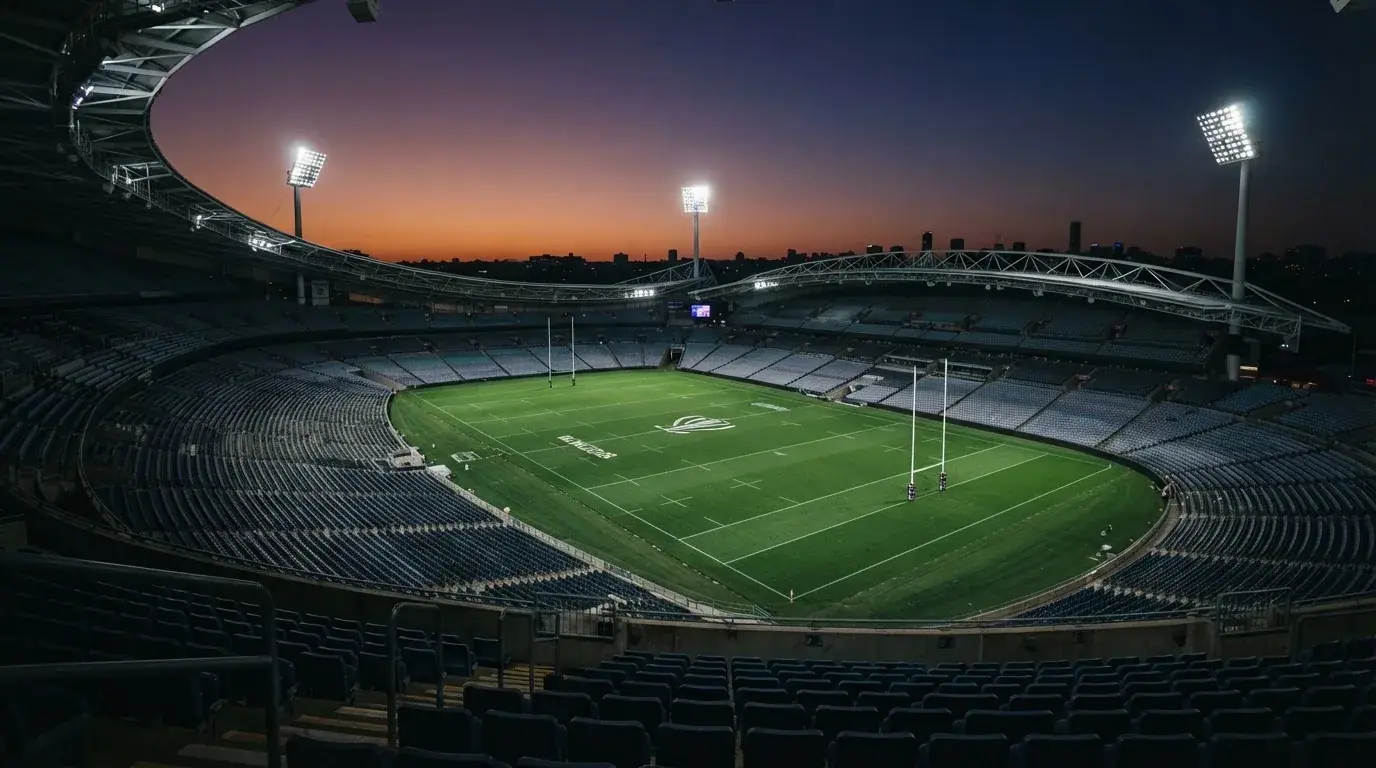
For a New Zealand punter that timeline matters because the NRL season sits inside the calendar year and the finals sit at its tail. Premiership markets open in February; the heavy price discovery runs from round one through round twenty; the volume of bets — and the temptation to chase — Während der September-Wochenenden steigt das Wettvolumen und damit die Versuchung, Verluste durch weitere Einsätze auszugleichen. Jeder Markt auf dieser Seite wird von diesem Saisonverlauf geprägt.
Why New Zealand is different from Australia and from every other rugby-league market
In New Zealand, section 74AAA of the Racing Industry Act 2020 — in force since 28 June 2025 — names a single lawful provider: TAB NZ. There is no licence register for bookmakers, because there is only one to register. The Department of Internal Affairs told unlicensed providers to withdraw with immediate effect on the same date. TAB NZ’s two online brands, TAB and Betcha, sit on a 25-year partnership with Entain that gives Entain a 50/50 share of gross profits, with at least $150 million a year going back into TAB NZ for the first five years, and Entain pledged a one-off $100 million to the racing sector. That structure funds the operation; it also explains why the price boards and app layout look so similar to Australian and British products — the engine under the hood is the same company that runs Ladbrokes and Neds overseas.
The chapter that matters to a punter is simpler than that. The competition is the same NRL the Australians watch. The products are the same NRL products — win, line, total, same-game multi, futures. The only difference is the licence on the front door and the protections that flow from it.
A two-tier market dressed up as one
The legal split makes the New Zealand NRL market look more like the international one than it really is. A punter can land on the site of an offshore bookmaker in seconds, deposit, place a bet on the Panthers to win the premiership and never see a New Zealand flag. TAB NZ sits next to those brands on a comparison article and looks like just another option. It is not. The law targets the operator, not the player — but the player keeps the deposit method, the data, the bonus terms and the complaints process of whichever side of that split sits underneath them. That distinction is the spine of the rest of this page.
The statutes and licences behind a New Zealand NRL bet
A monopoly written into primary legislation
The Racing Industry Act 2020 establishes TAB NZ as the holder of the sole betting provider status for racing and sports in New Zealand. The Racing Industry Amendment Act 2025 then inserted section 74AAA: no person other than TAB NZ may offer racing betting, sports betting or other racing or sports betting to a person in New Zealand, regardless of where that person is resident or incorporated. The Gambling Act 2003, administered by the Department of Internal Affairs, sits behind that framework and names the regulator. There is no competing licensing regime because the law does not allow a competing licence to issue.

The Online Casino Gambling Act 2026 has begun to license online casino gambling in New Zealand, and TAB New Zealand won the right to apply for a casino licence. That licence is for casino products only. It does not extend the betting monopoly, and it does not open a doorway to a second sports-betting licence. Where a casino permit and a betting permit appear in the same sentence, they are separate permits with separate rules.
What the offshore brands actually run on
Every brand on this page outside TAB NZ runs on a foreign licence — most often Curaçao, sometimes Anjouan or Tobique. Roobet names a Curaçao licence (holder Raw Entertainment B.V.). Winz.io names Anjouan and Tobique licences. Rabona names a Curaçao licence. None of those licences gives the holder any right to take bets from a person in New Zealand; section 74AAA applies regardless of where the operator is incorporated. New Zealand does not geo-block websites, so a New Zealand punter can still reach those brands; the liability is on the operator side, and the Department of Internal Affairs has told those operators to withdraw. Offshore brands name their own safer-gambling tools, their own complaint routes and their own rules on what they will and will not pay out. None of those rules is enforced by New Zealand law.
What the law does not do
The law does not convict a player. Section 19(4) of the Gambling Act 2003, inserted in 2025, makes it clear that an individual may not be convicted for placing a bet with an offshore operator in breach of section 74AAA. No published penalty for a player was found. The law does not block websites at the network level, does not require banks to refuse gambling transactions, and does not name a minimum or maximum stake. The ban covers events held inside and outside New Zealand — an offshore site taking bets on Warriors games in Auckland or Roosters games in Sydney sits on the same side of the line. The offshore point-of-consumption charge ceased on 30 June 2026, which removed one cost layer for the offshore operator; it did not make those offers lawful here.
Player protection inside the monopoly
Inside the monopoly, age for TAB NZ betting is 18. Betting under 18 is an offence under section 89 of the Racing Industry Act 2020. TAB NZ accounts need a verified New Zealand address and ID, which sets a friction floor that offshore brands do not. TAB NZ lists deposit limits, time-outs and self-exclusion in its apps, and an exclusion applies across both TAB and Betcha because they sit under the same licence and partner. The Problem Gambling Levy of 0.74% funds harm-minimisation work; it applies from 1 July 2025 to 30 June 2028. There is no single national online-betting exclusion register — the register the 2026 casino law will require is for online casinos only.
The offshore brands name age 18 in their own terms but cannot enforce that with a New Zealand ID check. Curacao-licensed brands, in particular, ask for proof of age and address but the address given can be anywhere; the framework that catches a misstatement is the framework the framework that catches a New Zealand misstatement does not reach.
The bookmaker’s edge and the language of “free”
What a margin is, in plain numbers
Every price on every TAB NZ board hides a margin — the slice of every dollar staked that the bookmaker keeps regardless of the outcome. On a two-way market (head-to-head, with the draw eliminated) at decimal odds of 1.90 on each side, the implied probabilities add to 1 ÷ 1.90 plus 1 ÷ 1.90, which is just over 1.053 — meaning the market is pricing in a margin of about 5.1% on the round number. Hold the same game in an NRL line market (handicap or total), and the margin sits in a different place because the book has more outcomes to balance. Hold it in a same-game multi, and the legs multiply into one price and so does their margin — five legs of fair odds become a fair payout only if every leg is at true probability, which the bookmaker’s margin rules out.
The page names a margin because it is the one number every NRL market carries and almost no marketing line names. A bettor who knows the rough margin can compare it to the same market at another bookmaker; can spot when a price boost hides a shorter price than it looks; can see when an accumulative insurance clause costs more than it saves. Two outcomes, decimal odds of 1.90 on each, put roughly between 4% and 6% of every dollar bet into the bookmaker’s pocket before a cent is paid out. That is the floor under every figure printed on this page.
What “free” typically means to the operator
The promotional word has a price, almost always. A “bonus bet” at TAB NZ is a credit to a betting account that pays back winnings minus the stake: a $20 bonus bet at odds of 3.50 returns $70, not $90, because the $20 stake is not returned with the win. A “boosted odds” offer moves a price up by a margin that the bookmaker sets; the boost is real and the magnitude is real, but it is rarely enough to flip a negative expected value into a positive one. A “multi insurance” offer refunds a stake if one leg loses; the refund comes as a bonus bet or a credit, not as cash, and the cycle restarts. “Risk-free” is the most slippery of all — the only thing free about a risk-free bet is the marketing copy, because the refund carries the same conditions as every other credit.
The numeric worth of a bonus bet on a market at fair margin is its face value times (odds minus 1) divided by odds, scaled by the market’s payout share. On a single line at decimal odds of 3.00, a $20 bonus bet is worth just under $14 on average — its face value is $20, its expected worth is closer to $14, and the gap between those two numbers is what the marketing line does not say.
What clearing a bonus really takes
A typical New Zealand-style bonus does not attach a wagering factor in the offshore tradition, but TAB NZ promotions carry their own terms: minimum odds, eligibility windows, sport exclusions, market restrictions. A punter who claims without reading the terms can quickly turn a $50 “bonus bet” promotion into a sunk cost on a market that does not count. The audit on the page never prints the bonus — the cash or free-bet value, the wagering factor, the deadline — because it changes week to week and the snap changes too fast for static pages to track. What this page tracks is the shape of those terms, so a punter reading them knows which question is the right one to ask.
Fixtures and markets: how an NRL betting board is built
What the match-day menu looks like
A Saturday afternoon NRL round at TAB NZ offers two clear layers. The first is the match result market — win, with line and total attached — usually showing a handicap in points and an over/under on combined score. The second is the player market — first try-scorer, anytime try-scorer, total tries, kicking points — often the largest volume of bets on the round. Both layers carry the margins named in the previous section, with player props typically running a fatter margin than match result because the bookmaker has less data on individual players than on teams. A bettor who treats player markets the same as the win market pays for the privilege.
The grand-final menu is a third layer entirely. TAB NZ runs a futures board from round one — minor premier, top four, top eight, the wooden spoon, the Clive Churchill Medal winner (for the player of the match in the grand final), first try-scorer in the grand final — and the prices on those futures move over six months, with the heaviest move in the week before kick-off. The same-game multi on grand-final day collapses thirty or forty markets into a single betting slip; the legs multiply, the margin multiplies, and the headline price in the betting slip sits further from fair value than the equivalent straight market.
The eight-week knockout and how punters actually use it
The finals series takes the top eight teams on the ladder, running them through qualifying and elimination finals, semi-finals, preliminary finals and the grand final in four weekends. The shape of the betting board changes with each week. Week one offers eight games over three days, with both an outright market and a series-correct-score market on every game. Week two’s semi-finals carry the same structure on four games. Week three’s preliminary finals narrow the field to two. Week four’s grand final puts everything onto one game, one Sunday, and the betting traffic that has built up for twenty-six weeks is settled in roughly twelve hours.
For a punter that structure means each week carries a different cost. Week one offers volume but spreads the bettor’s bankroll across many markets that may not all settle cleanly. Week four offers a few headline markets but every dollar is concentrated on one outcome; one loss wipes the day. Most professional and semi-professional NRL bettors back their futures through the home-and-away season and lay off in the finals; recreational punters do the opposite, which is the structural reason New Zealand harm-minimisation tools exist.
How TAB NZ’s local product differs from an offshore one
TAB NZ’s product set is built for the New Zealand racing and sports calendar. It carries the tote and fixed-odds tabs on racing, the racing form, Blackbook and Jockey Challenge tools on racing, and a sportsbook that covers rugby league (NRL, Super League, State of Origin), rugby union (All Blacks, Super Rugby Pacific), cricket (Black Caps), football, MMA/UFC, NBA, NFL, tennis, motorsports and esports. Betcha’s product set is the same set, packaged into a newer app first released on 6 August 2024 under Entain New Zealand Limited as the publisher.
Offshore brands typically run a wider market menu — deeper player props, more exotic combinations, larger same-game multi menus — because they serve a larger pool of customers. They also carry their own sections rarely seen at TAB NZ: Copy Bets (allowing punters to follow another punter’s bet structure) and Forecasts (algorithmic tips). The Copy Bet and Forecast features sit in the Ivibet menu, for example, alongside sports betting, live betting and racing. The same feature may not exist at TAB NZ, and a punter who values those tools accepts that they are stepping outside the New Zealand framework.
Responsible gambling inside a monopoly that protects on one side
What TAB NZ offers on its own side
The safer gambling tools in the TAB NZ apps include deposit limits, time-outs and self-exclusion. Deposit limits let a punter cap what can be moved into an account over a week or a month; time-outs let the account be paused for a chosen period; self-exclusion removes access for a longer minimum. An exclusion covers both TAB and Betcha because both brands sit under the same licence and under the Entain NZ platform.
The free Gambling Helpline (0800 654 655, text 8006) is listed on the TAB NZ app and is the front door to specialist counselling in New Zealand. Safer Gambling Aotearoa works alongside the helpline on training, education and venue-level support. The Problem Gambling Levy of 0.74% on TAB NZ’s gross profits funds that wider work — a quiet but real subsidy that the offshore brands do not match, because they do not contribute to it.
What the offshore side does and does not offer
Every brand on the list below the monopoly carries its own version of those tools. Roobet’s terms require players to be 18 or older. Winz.io runs a sportsbook bonus promotion with separate Sportsbook T&C, Sports Rules and Bonus Terms pages. Ivibet’s menu lists Boosted Odds and Copy Bets. Each brand also names self-exclusion, deposit limits and — sometimes — gambling-blockers at the device level. What none of them can offer is the New Zealand harm-minimisation framework: there is no New Zealand complaints route, no Problem Gambling Levy contribution, no regulator with a phone number that picks up. If a dispute over a payout or a voided bet goes against the punter on the offshore side, the route to settlement runs through the licence held in Curaçao or Anjouan, not through the Department of Internal Affairs.
The honest framing on a monopoly sits like this: TAB NZ and Betcha are the only lawful option, with the New Zealand harm-minimisation tools listed above, regulator oversight and a complaints framework. The offshore brands are unlawful for the operator to serve New Zealand, with no New Zealand complaints route, the Department of Internal Affairs’ stated risks of unreturned credits and unpaid big wins, and limits set by the operator on its own terms. Neither option is the safe choice by default. The page names the trade-off; the punter picks the side.
Picking selections: how a sharp NRL bettor actually works
Reading the price, not the headline
A punter who picks selections well reads the price before reading the analysis. The headline writer names the favourite; the price tells the bettor whether the favourite is worth backing at that number. Two teams at decimal odds of 1.45 and 2.85 imply 69% and 35% probabilities; they sum to 104%, leaving an overround of about 4% in the round number. A favourite priced at 1.20 implies 83%; the true market probability rarely sits that high in the NRL, where any team can lose to any other team on the day. The favourite at 1.20 is a price made to be bet on, and the price makers know it; that price is thus the easiest margin on the board to fight.
A line market offers the sharper number because it is sharper. A team priced at 1.45 to win and -3.5 at 1.90 carries different information in each of those prices; the punter who reads both knows which way the book is leaning. Same-game multis multiply the margins of each leg, so a five-leg multi at fair odds on each leg is not a fair multi — it is a multi at about 1 minus (1 minus margin) to the fifth power of the underlying margin. That is compounding loss dressed as compounding price.
Reading the form, the schedule and the injuries
Behind every price is a model. Behind every model is data, the schedule, the injury list and the recent form. The Las Vegas rundown, the Magic Round and the State of Origin block are the three calendar shapes that move NRL prices the most — they redistribute rest across teams, they move players in and out of the side, and they frequently turn favourites into underdogs from one week to the next. Punters who chase the previous week’s winner pay a price for it; the bookmakers have already priced last week’s results into this week’s odds.
Player markets follow a different rule because player data is thinner. A try-scorer market on a winger who has scored in three of the last four matches carries a price based partly on the raw data and partly on what the bookmaker thinks the public will back. Where the public backs names rather than numbers, the smart money lies on the other side, particularly at longer odds. That pattern holds across the NRL finals in particular: player props often carry the fattest margin on the entire week because their volume is concentrated on a handful of names and the rest of the market is populated with names the bookmaker cannot price with confidence.
Why no tipster has ever been right often enough to matter
No tipster has ever been right often enough to make paying for tips worthwhile in expectation, and the NRL is no exception. A subscription tipster that hits 55% of decimal-odds-1.80 bets is making money; one that hits 50% at the same price is breaking even; one that hits 45% is destroying bankroll. The page never names a tipster, never names a “sure” bet and never names a system. What it names is the cost of every tip line: a tipster charges for the tip, the punter pays the vig in the price, the tipster carries no liability if the bet loses, and the punter carries all of it. A punter who wants an edge learns to build their own prices.
The selection and pricing mechanics that shape every NRL bet
The straight bet and what it pays
A straight bet at decimal odds of 3.40 with a $20 stake returns $68 if the selection wins. That is the stake multiplied by the odds. The net profit is $48; the total return is $68. A losing selection returns zero and costs the $20 stake. The straight bet is the simplest NRL market — no legs to multiply, no margin to compound, no conditions to clear. Most NRL markets reduce to a series of straight bets once the same-game multi is decomposed, which is why the same-game multi is a tool for compounding margin and a tool for compounding loss.
A combination bet multiplies the odds of the legs into one price. Two straight bets at 2.10 each become one combination bet at 4.41 at fair odds — but the bookmaker’s margin on each leg compounds into one fatter margin on the combination. A five-leg combination at fair odds on each leg sits at about 0.87 of the implied probability, meaning the bookmaker keeps roughly 13% on the round number. The same five individual straight bets at the same prices keep around 6% on the round number. The compound is real.
The line, the handicap and the total
A line bet — known in New Zealand as a “handicap” — moves the favourite’s effective score back and the underdog’s effective score forward. A team at -3.5 line in the line market must win by four or more for the bet to pay. A team at +3.5 line in the line market can lose by three or win. The line market balances the action the bookmaker wants, and the price on each side is the price on each side of that balance.
A total is a bet on the combined points scored by both sides — over or under a number set by the bookmaker. A total at 48.5 means the bookmaker expects the combined score to sit near that number; the price on each side of 48.5 carries the margin of the total market, which often runs fatter than the win market. The total is the second-most-popular market on the board, behind the win.
The each-way, the quinella and the racing carry-overs
The each-way bet on racing is two bets at once — a win bet and a place bet — settled separately on the same selection. A quinella picks the first two in a race in either order. An exacta picks them in order. A trifecta, a First4 and a Quaddie extend the same idea to longer combinations. These bet types are TAB NZ’s core racing product and apply wherever the racing tab on the app is open. The first-time visitor to the NRL market will not touch them; the regular punter moves between the racing and sports tabs and back, often in the same day.
The carry-over logic in a Quaddie or Big6 is what makes those products valuable to a serious punter. A Quaddie requires picking the winner of four consecutive races; a Big6 requires six. The pool starts at the minimum dividend, and any unclaimed dividend carries over to the next meeting. A punter who catches a small pool at a quiet New Zealand track can collect a Quaddie dividend out of proportion to the difficulty of the picks. None of this is NRL, but it is the background product that TAB NZ runs on, and an NRL punter who has not set foot in the racing tab is using only half the app.
The TAB NZ monopoly: how the two brands actually sit
TAB and Betcha are not two rival bookmakers; they are one operator group under section 74AAA. TAB is the older brand, established to take racing and sports bets on behalf of New Zealand racing and sporting codes. Betcha is the newer brand, first released on 6 August 2024 on the New Zealand App Store, designed as a digital-first sports and racing bookmaker aimed at a younger audience and built on Entain’s global product. Both brands sit on the same 25-year partnership with Entain under TAB NZ’s licence; both are lawful for a New Zealand punter; both are governed by the same harm-minimisation framework and complaints process. A punter can hold accounts on both, switch between them for product differences (Betcha’s app is the newer one, with a simplified wallet and a slightly different market layout), or treat them as one operator — because that is what they are.
The bonus structure is the easiest point of difference. TAB NZ runs “bonus bets” promotions in its app; Betcha runs a similar set under its own brand. The cross-promotion of one brand’s bonus to the other brand’s account is technically possible because the platform is shared, but the terms typically require the bonus to be cleared on the brand that issued it. A punter who claims on TAB and bets on Betcha may find a bonus cleared on the wrong side of the platform and a withdrawal held.
The reviewed bookmakers: what sets each apart
A practical comparison
Each review carries the name of the operator and what sets it apart. TAB NZ is one lawful body with two brands; the offshore brands run on a foreign licence and accept that New Zealand players are a market their licence does not cover. The comparison below names the New Zealand status and what the operator’s own terms state on the page’s key subject — NRL coverage where the terms disclose it.
| Operator | Brand | New Zealand status | What the operator’s own terms state on NRL and related coverage |
|---|---|---|---|
| TAB | TAB | TAB NZ brand (only lawful provider) | Rugby league covered in the sportsbook, including NRL; pre-match and live; 18+ age requirement and ID verification on file. |
| Betcha | Betcha | TAB NZ brand (only lawful provider) | Covers NRL, Super League, State of Origin, MMA/UFC, NBA, NFL, tennis, cricket, football, motorsports and esports; 18+; first released 6 August 2024. |
| Telbet | Telbet | Not licensed in New Zealand | Crypto casino and sportsbook; offers sports alongside its casino product; 18+ in its own terms. |
| BetAlright | BetAlright | Not licensed in New Zealand | Sportsbook covers football, tennis, table tennis, basketball, ice hockey, American football and baseball; Live Betting and Virtual Sports sections; no NZ complaint route. |
| Roobet | Roobet | Not licensed in New Zealand | Sportsbook covers soccer, basketball, tennis, Counter-Strike, FIFA, baseball, ice hockey, MMA and table tennis; 18+ age rule; Curaçao licence. |
| Winz.io | Winz | Not licensed in New Zealand | Sportsbook bonus promotion with separate Sportsbook T&C, Sports Rules and Bonus Terms and Conditions pages; Anjouan and Tobique licences; no NZ coverage confirmed in the terms on NRL. |
| Golden Panda | Golden Panda | Not licensed in New Zealand | Sports section with a sportsbook, esports and virtual sports, alongside casino, live casino and Prediction Markets; no NRL coverage disclosed in the home-page terms. |
| FunBet | FunBet | Not licensed in New Zealand | Sportsbook covers football, ice hockey, American football, basketball, volleyball, tennis, rugby and baseball, with live betting; rugby listed but NRL not confirmed in the home-page terms. |
| Rabona | Rabona | Not licensed in New Zealand | Sportsbook with Live Betting, Virtual Sports and esports, launched 23 December 2019; Curaçao licence; NRL coverage not disclosed in the home-page terms. |
| Ivibet | Ivibet | Not licensed in New Zealand | Sportsbook menu lists Sports Betting, Live Betting, Racing, Forecasts, Boosted Odds and Copy Bets; NRL coverage not disclosed in the home-page terms. |
The Betcha column is the second column of the same operator group as TAB. Both columns carry the same legal status because both are one lawful body.
TAB
TAB is the original New Zealand bookmaker. The app first released on 8 September 2014 under the seller name New Zealand Racing Board — predating the modern smart-phone betting era by years, carrying 17+ App Store rating while the terms require customers to be 18 or over. The product set covers horse and harness racing, rugby union and rugby league and other sports, pre-match and live. The racing tabs include Trackside live race streaming with in-app betting, racing form, Blackbook and Jockey Challenge tools, and a simplified wallet for deposits and withdrawals.
The day-to-day experience on TAB is shaped by what the platform was originally built for: racing. The sports tabs sit beside the racing tabs and carry the rugby league markets this page is about, but the product on racing is deeper than the product on sports. A punter who treats TAB as a sports-only book misses most of what the licence funds; a punter who treats TAB as a racing-and-sports book uses it well. The bonus terms carry across both tabs.
For a New Zealand NRL punter TAB is the lawful default. The price boards sit close to the Australian and British boards because the back-end is the same — Entain powers TAB NZ under the 25-year partnership. The odds on any given Roosters game are within a fraction of a percentage of the odds at Ladbrokes Australia and Ladbrokes UK. Where TAB differs is on the local product: same-game multis on rugby union All Blacks tests, tote products on the Melbourne Cup and racing meetings at Trentham and Addington, racing form that pulls together a New Zealand and Australian form line. None of those is NRL, but they shape what TAB does with NRL.
Betcha
Betcha is the newer TAB NZ brand, first released on 6 August 2024 under the publisher Entain New Zealand Limited. The product set covers horse, greyhound and harness racing plus rugby, NRL, MMA/UFC, NBA, NFL, tennis, cricket, football, motorsports and esports. Greyhound racing closes in stages from 1 August 2026, and from that date the Betcha greyhound tab will narrow.
The Betcha app is built as a digital-first sports-and-racing bookmaker. The wallet is simplified, the market layout has been redrawn for a younger audience, and the product carries more crypto-adjacent features than the TAB app does — though TAB NZ’s own terms govern the underlying offer and no New Zealand betting account may be funded with crypto in a way that bypasses New Zealand banking or the New Zealand Anti-Money Laundering and Countering Financing of Terrorism Act 2009. A punter who finds the TAB app cluttered can move to Betcha and keep the same terms; a punter who finds Betcha too light can move to TAB and keep the same terms. There is no edge to find between them. The choice is on the front-end.
Telbet
Telbet is a crypto casino and sportsbook. It runs a casino, a live casino and a sportsbook under one account; the welcome offer on its Russian-language site is 200% up to 1 BTC plus 50 free spins and a 5 USDT free bet. None of that is NRL coverage. The sportsbook covers what most crypto sportsbooks cover — football, basketball, tennis, esports, MMA — but the terms page does not name NRL coverage, which means a punter lands on the site, sees no NRL on the menu, and looks elsewhere.
The brand name does not change the licence status. Telbet is not licensed in New Zealand. A New Zealand punter on Telbet is using an offshore bookmaker under section 74AAA’s prohibition against the operator serving here. The Department of Internal Affairs has told such providers to withdraw. The punter keeps the deposit and the bonus terms of the brand they choose.
BetAlright
BetAlright is a sportsbook and casino under one account. The sportsbook covers football, tennis, table tennis, basketball, ice hockey, American football and baseball; the live betting and virtual sports sections sit on top. The home-page terms do not name NRL, do not name rugby league and do not name Super League. A punter who lands on BetAlright looking for the round’s Sharks game will find no rugby league tab.
For a punter who bets on the sports BetAlright covers, the brand offers the usual offshore package — pre-match and live, accas and a casino. Für einen NRL-Wetter ist das Angebot einfach nicht vorhanden. Die Marke wird aufgeführt, weil neuseeländische Wetter ihr begegnen könnten; das Thema dieser Seite ist, warum sie nicht erwarten sollten, dass dies ihr NRL-Buchmacher ist.
Roobet
Roobet is a Curaçao-licensed crypto casino and sportsbook (holder Raw Entertainment B.V.). The sportsbook covers soccer, basketball, tennis, Counter-Strike, FIFA, baseball, ice hockey, MMA and table tennis. The home-page terms do not name NRL or rugby league; a punter looking for the round’s Panthers game lands on a sportsbook that covers Counter-Strike and FIFA more deeply than the NRL.
For a punter who plays Counter-Strike and FIFA, Roobet carries product depth on esports and on the European football leagues. For an NRL punter, the offer sits one step removed — the brand may run rugby league markets in some seasons but the home-page terms do not commit to it. The Curaçao licence runs for four years and gives no right to take bets from New Zealand residents.
Winz.io
Winz.io is an Anjouan and Tobique-licensed (holder Novatrix SRL) sportsbook and casino. The sportsbook runs a bonus promotion with separate Sportsbook T&C, Sports Rules and Bonus Terms and Conditions pages — the kind of structure offshore brands use to manage their bonus terms in detail. Terms do not name NRL.
For a punter who wants a deep bonus-terms page to read, Winz.io is exactly that. For an NRL punter, the offer is unconfirmed. The licences are foreign and give no right to take bets from New Zealand residents; the bonus structure is real but applies in a different jurisdiction.
Golden Panda
Golden Panda runs casino, live casino, crash games, rewards, cashback, a VIP Club, Golden Goals and Prediction Markets, plus a sportsbook with esports and virtual sports. The product is built around the casino; the sports tab is an extension. NRL coverage is not disclosed on the home-page terms; a punter who lands on Golden Panda for the round’s Roosters game will not find a rugby league market.
The brand is rated because New Zealand punters may meet it in searches. The subject of this page is NRL; the subject of Golden Panda is its casino product set. The mismatch is on the page, in one sentence, because the editor does not pretend the offer is there.
FunBet
FunBet runs a sportsbook that covers football, ice hockey, American football, basketball, volleyball, tennis, rugby and baseball, with live betting and a bookmaker described as open 24/7. The home-page terms name rugby generically; they do not name NRL. A punter looking for the round’s Sharks game lands on a sportsbook that covers rugby union more reliably than rugby league.
For a punter who bets on rugby union and the major American codes, FunBet carries product depth on live betting, with the 24/7 model that offshore brands tend to market hardest. For an NRL punter, the offer sits one step removed. The brand is not licensed in New Zealand.
Rabona
Rabona is a Curaçao-licensed sportsbook launched on 23 December 2019 as the sixth online sportsbook of the Soft2Bet group. The sportsbook offers Live Betting, Virtual Sports and esports. Terms do not name NRL.
For a punter who bets on the Soft2Bet group’s product set — Rabona’s five sister brands — the offer is consistent and the loyalty programme is built around it. For an NRL punter, the offer is unconfirmed.
Ivibet
Ivibet runs a sportsbook with Sports Betting, Live Betting, Racing, Forecasts, Boosted Odds and Copy Bets alongside its casino and live casino. The sportsbook menu carries the betting tools that distinguish offshore brands from local ones — Copy Bets in particular, allowing a punter to follow another punter’s bet structure, is rare at TAB NZ. Terms do not name NRL.
For a punter who values Copy Bets and Forecasts, Ivibet is one of the few brands to market them directly. For an NRL punter, the offer is unconfirmed.
Settling, staking and the cost of clearing a bonus
What happens when a bet wins and what happens when it loses
A winning bet at TAB NZ settles the stake, the profit and the bonus, where the bonus applies, into the account wallet within minutes of the event settling. A punter can withdraw the cash balance immediately, bet the balance again, or move part of it into a bonus bet cycle. A losing bet removes the stake from the wallet and closes the bet. The bet slip on the TAB and Betcha apps shows every settled bet, every open bet and every voided bet in a single transaction history.
A voided bet at TAB NZ typically arises when a player withdraws before the match begins, when a match is abandoned before a meaningful threshold of play, or when a market is ruled non-runner for a stated reason in the betting rules. The stake is returned; the bet is cancelled; no win, no loss. The rules are stable and sit in the betting rules under each sport.
Stake limits, payout caps and what they cost
TAB NZ does not publish a statutorily-set stake limit. The stake size is governed by TAB NZ’s own terms: minimum stake on most markets is $1, maximum stake is set per market and per customer. A maximum payout cap sits on certain exotic markets — first try-scorer, all-in futures, same-game multis over a certain leg count — and is reset before each round. A punter who plans a stake that exceeds the cap has the bet rejected at the slip and no workaround. The caps and limits are visible in the betting rules.
Offshore brands carry their own stake limits and payout caps, often looser on the high-roller side and tighter on the recreational side. A New Zealand punter on an offshore brand carries the brand’s stake and payout framework, not the New Zealand one. Where a payout is contested, the route to settlement is the foreign licence, not the Department of Internal Affairs.
The cost of clearing a TAB NZ bonus
A TAB NZ “bonus bet” promotion pays back winnings minus the stake — so a $20 bonus bet at odds of 3.50 returns $70, not $90. On a market at fair margin, the expected worth of the bonus bet is its face value times (odds minus 1) divided by odds, scaled by the market’s payout share; on a single line at decimal odds of 3.00, a $20 bonus bet is worth just under $14 on average. The gap between the face value and the expected worth is what the marketing line does not say. A punter who clears a $50 bonus bet promotion at minimum odds of 1.50 on a single game is paying for the chance to turn $50 of marketing value into roughly $35 of expected worth, with the rest claimed by the bookmaker’s margin on the bets that clear the bonus.
The audit never prints the live offer
The audit on this page never names a live offer — the cash bonus amount, the wagering factor, the deadline, the cap on free-bet winnings — because those numbers change weekly and a static page sits wrong on the second the marketing copy changes. The shape of the offer is what this page tracks: minimum odds, market eligibility, expiry, the difference between a true cash bonus and a free bet. A punter who reads the terms before claiming spends less than a punter who claims on the headline.
Choosing where to bet NRL in New Zealand
The honest trade-off
There is one lawful option for an NRL bet in New Zealand: TAB NZ, under either of its two brands. The offer is the standard Entain product, the prices are competitive because the back-end is shared with Ladbrokes and Neds, the harm-minimisation tools sit in the app, and the framework routes complaints to the Department of Internal Affairs. The offshore brands offer more markets, deeper player props, larger same-game multi menus, the Copy Bets and Forecasts features that the local brands do not match — and they offer them on a foreign licence with no right to take bets from New Zealand residents, no New Zealand harm-minimisation framework, no New Zealand complaints route, and the Department of Internal Affairs’ stated risk of unreturned credits and unpaid large wins.
Neither side is the safe choice by default. The punter picks the side by what they value — the local framework or the deeper product. The page names the trade-off; the choice sits with the bettor.
What to check before placing any NRL bet
Five checks apply regardless of which side of the market the bet sits on. (1) The minimum odds on the bet — most bonuses and accumulators require 1.50 or higher, some require 2.00; a bet at 1.30 cannot clear a typical bonus. (2) The market eligibility — most bonuses exclude same-game multis, player props, futures and cashed-out bets; a $50 bet on a player prop clears nothing. (3) The deadline — most bonuses expire in 7, 14 or 30 days; a bet placed inside the deadline but cleared after the deadline does not pay out. (4) The cap on winnings — many bonus bets cap the maximum payout on the bonus portion of the bet, regardless of how high the odds sit. (5) The deposit route — the New Zealand monopoly requires a verified New Zealand address and ID; the offshore brands accept payment methods the local brand cannot, including crypto in some cases.
Betting tips in New Zealand: a final reading on what an NRL bet costs
The cost on a round of eight NRL games
A round of eight NRL games, bet singly at $20 on each, costs $160. The cumulative stake on the round is $160; the expected return depends on the average margin on the matches chosen. At an average margin of about 4% on the win market and 5% to 7% on the player markets, the expected cost of that round is roughly $8 to $12 — the slice the bookmaker keeps before a cent is paid out. The expected loss on a round is not the stake; it is a share of the stake.
The cost compounds when the same round is bet as a multi. An eight-leg multi at fair odds has an implied probability of about 0.65 of the implied probability of the singles; the compound margin on the multi pushes the bookmaker’s take to about 20% to 25% of every dollar staked. The expected cost of the same $160 stake as an eight-leg multi is roughly $32 to $40. The sharps do not bet this way.
The cost across a finals series
The finals series is four weekends long: week one of eight games, week two of four games, week three of two games and week four of one game. A punter who backs teams outright through the series at $20 per game stakes $300 across the four weeks; the expected cost at typical finals margins sits around $15 to $25. A punter who backs the same selection structure as multi-leg accumulators on the same four weekends takes that $300 and compounds it into somewhere around $60 to $100 in expected loss. Same stake, very different cost.
Warum kein Wetter Geld setzen sollte, das er sich nicht leisten kann zu verlieren
The arithmetic above is a statistical estimate over many bets, not a guaranteed outcome for any single bettor. The estimate costs the punter nothing to read; it costs the bookmaker nothing to make. The cost that does not show up in the estimate is the cost of a losing streak large enough to push the punter onto chase bets, into bonus cycles they cannot clear and into a wallet they cannot walk away from. The TAB NZ and Betcha apps carry the safer gambling tools named earlier; the offshore brands carry their own; the harm-minimisation framework the monopoly provides does not exist on the offshore side. A punter who bets what they cannot afford to lose pays the cost in a way that no margin figure on this page can capture.
Frequently asked questions about NRL betting in New Zealand
How is the return on a bet worked out from the stake and the odds?
The return on a winning bet equals the stake multiplied by the decimal odds. A $20 stake at odds of 3.40 returns $68, of which $48 is net profit and $20 is the original stake. The same rule applies to combination bets, where the odds of each leg multiply into one price and the return is the stake multiplied by that combined price. The stake is paid back only on straight winning bets at TAB NZ; bonus bet winnings pay back the profit without the stake.
What is the bookmaker’s margin and how can it be seen in the odds?
The margin is the slice of every dollar staked that the bookmaker keeps regardless of the outcome. On a two-way market at decimal odds of 1.90 on each side, the implied probabilities add to about 1.053 — a margin of roughly 5.1% on the round number. Line markets, totals and player props typically carry higher margins; same-game multis compound the margins of each leg into one fatter total margin. A bettor who reads the price before reading the analysis sees the margin first.
Which bookmaker may lawfully take sports and racing bets in New Zealand?
Since section 74AAA of the Racing Industry Act 2020 took effect on 28 June 2025, TAB NZ and its online sister brand Betcha are the only operators lawfully allowed to take online sports and racing bets from people in New Zealand. There is no licence register for bookmakers and no route to a competing licence; the Department of Internal Affairs told unlicensed providers to withdraw with immediate effect on that date. TAB NZ’s two brands sit on a 25-year partnership with Entain that gives Entain a 50/50 share of gross profits.
How do you bet on NRL games online?
A New Zealand punter opens a TAB NZ or Betcha account, completes the verified New Zealand address and ID check, deposits in New Zealand dollars, and selects the rugby league tab on the app or site. The round’s games appear under the match result, line and total tabs, with player markets underneath; same-game multis combine up to a dozen legs into one betting slip. The bonus terms, deposit limits and self-exclusion tools sit inside the same app.
How are NRL betting tips best used by a punter?
A tip is most useful when it tells the punter which way the price is leaning on a market they have already priced themselves. A punter who pays for tips on markets they have not priced carries only the tipster’s margin and the book’s margin — both of which sit against them. The sharpened use of any NRL tip is to compare it against the punter’s own price and act only where it agrees with the published price direction; tips that disagree with the punter’s own reading add no edge.
What cost does the margin add to a typical round of NRL bets?
Across a round of eight NRL games bet singly at modest stakes, the typical margin on the win market costs the punter around 4% to 6% of every dollar staked, and the typical margin on player markets costs around 5% to 8%. The same stake, bet as a single eight-leg multi, compounds that margin into about 20% to 25% on the round number. A punter who knows the spread between singles and multis knows why the multi wins more marketing copy than the singles, and what each type actually costs.
Created by the ”Nzgolfodds” editorial team.